
Kosovo UNESCO Sites Day Tour from Pristina 2026
Western Kosovo is one of the Balkans’ most rewarding cultural regions, yet many visitors see only Pristina before moving on. From the capital, a single well-planned day can take you through mountain scenery, medieval Serbian Orthodox heritage and the lively Ottoman-era streets of Gjakova. The Kosovo - UNESCO sites - Day Tour from Pristina is designed around exactly this experience.
I recommend this excursion to travelers who want context as well as photographs. You visit two important components of the UNESCO-listed Medieval Monuments in Kosovo and then spend time in Gjakova’s historic Carshia, one of the country’s most atmospheric urban quarters. The result is a balanced day combining sacred art, history, local life, architecture and excellent regional food.
This 2026 guide is based on the practical questions I hear most often: how long the journey takes, what the day costs, what to wear, whether the monuments are open, and how to make the most of each stop. It also explains why this route is especially valuable for first-time visitors to Kosovo.
Why take a Kosovo UNESCO sites day tour from Pristina?
Pristina is Kosovo’s energetic political and cultural centre, but its most celebrated medieval monuments are outside the capital. Peja lies west of Pristina at the entrance to the dramatic Rugova region, while Decan is farther south-west in a green valley beneath the Accursed Mountains. Gjakova, between the major western towns, adds a completely different atmosphere with its long bazaar, stone bridges, cafés and craft traditions.
Driving independently is possible, but a guided day tour is simpler and more informative. The distances are manageable, although roads, monastery security procedures and local navigation can make an unguided schedule less predictable. On a professionally organized tour, transfers are coordinated, the route is efficient and your guide can explain the religious symbolism, historical changes and cultural sensitivities that are easy to miss when visiting alone.
The tour is also a useful introduction to Kosovo’s layered identity. Roman, Byzantine, Serbian medieval, Ottoman, Yugoslav and contemporary influences appear within one day. Rather than treating the monuments as isolated attractions, the itinerary shows how they fit into the wider history of the western Balkans, including connections with Albania, Montenegro and North Macedonia.
At a glance: the 2026 day-tour itinerary
The exact departure time and order can vary according to season, access arrangements and the day’s conditions. In my experience, you should expect a full day of approximately 8 to 10 hours, usually beginning in Pristina in the morning and returning in the early evening.
- Morning departure from Pristina: Meet your guide and travel west through Kosovo’s rolling countryside.
- Patriarchate of Peja: Visit the historic monastery complex at the foot of the Rugova gorge.
- Monastery of Decan: Explore one of the region’s most important medieval churches and its remarkable frescoes, subject to access conditions.
- Gjakova Carshia: Walk through the historic bazaar, see traditional architecture and take time for lunch or coffee.
- Return to Pristina: Arrive after a day of heritage, scenery and local discovery.
Allow extra flexibility around the monastery visits. These are active religious sites, not simply museums, and access may involve identification checks, security controls or changes to visiting hours. Your guide will normally help coordinate the practical details.
Stop one: the Patriarchate of Peja
The Patriarchate of Peja, known locally as Pejska Patrijarsija, is set beside the entrance to the Rugova Canyon. Its red-toned medieval churches sit against a striking natural backdrop, creating one of the most memorable cultural landscapes in Kosovo. The complex forms part of the UNESCO-listed Medieval Monuments in Kosovo, recognized for outstanding examples of Byzantine-Romanesque religious architecture and wall painting.
Inside, the churches contain layers of frescoes dating from different periods. Look closely at the colour, composition and expressions in the paintings; even visitors who are not specialists in religious art can appreciate the density of detail. A guide helps explain the relationship between the separate churches, the ecclesiastical role of the site and the way the monastery survived through periods of political and social change.
The setting is equally important. Peja’s mountains rise sharply behind the complex, and the contrast between the quiet monastery courtyard and the rugged gorge gives the visit a powerful sense of place. Take a few minutes to observe the stonework, rooflines and surrounding trees before moving inside. Photography rules can differ by area, so always ask before taking pictures, especially inside the churches.
If you have additional time in Peja on another day, consider using the Self-Guided Tour of Peja to explore more of the town and its nearby points of interest at your own pace.
Stop two: Visoki Decani Monastery
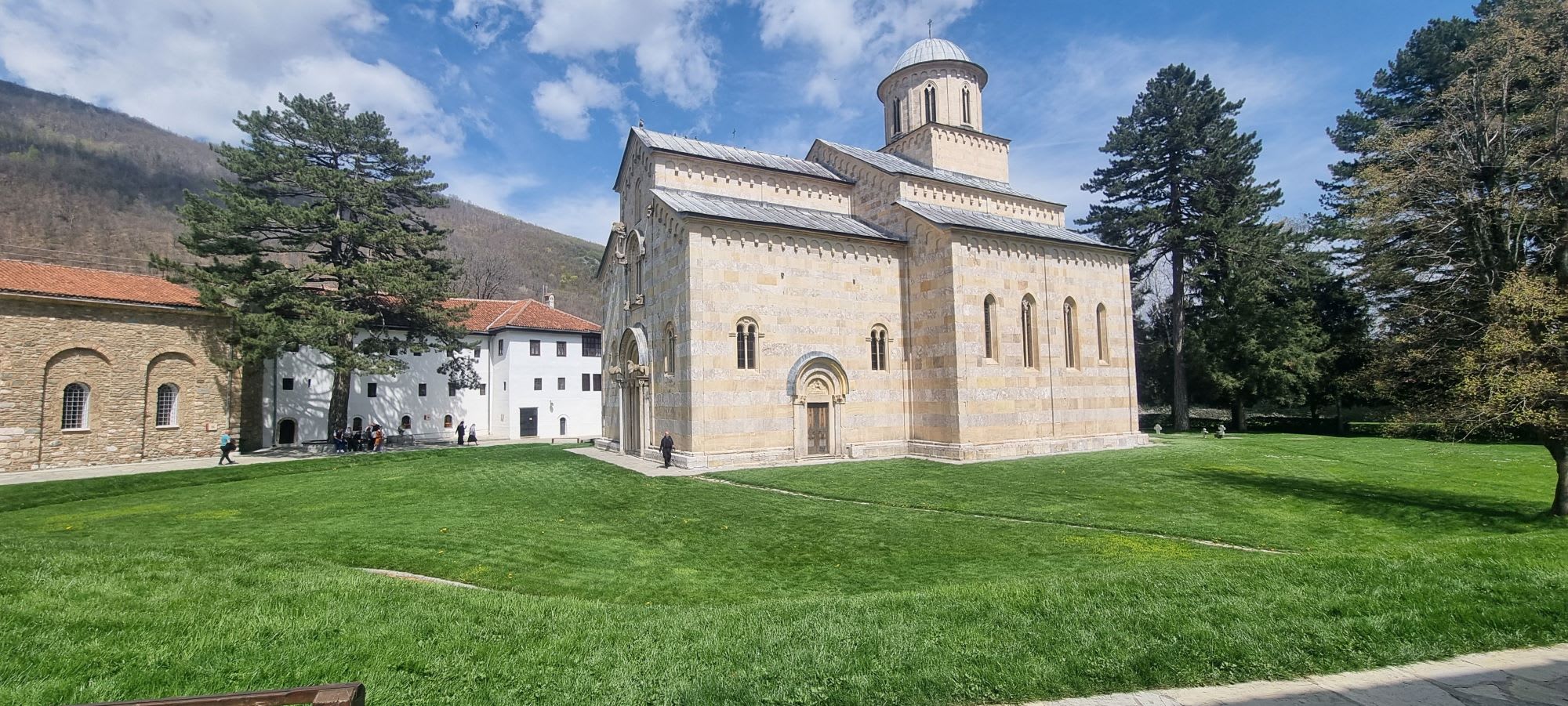
The Monastery of Decan, often called Visoki Decani, is the architectural highlight of the excursion for many travelers. Founded in the fourteenth century, it is celebrated for its monumental stone church, harmonious proportions and extensive fresco decoration. Like the Patriarchate of Peja, it belongs to the UNESCO Medieval Monuments in Kosovo designation.
The church combines Romanesque exterior features with Byzantine artistic traditions, a visual reminder that medieval Kosovo stood at a crossroads between cultural worlds. Inside, the fresco cycle is exceptionally rich. Scenes from the life of Christ, saints and biblical narratives cover the walls, while the scale of the interior gives the artwork a solemn, immersive quality.
Visitors should approach this stop with respect and patience. Decan remains an active monastery, and entry is dependent on current security and religious arrangements. Bring a passport or another official identity document, dress modestly and avoid loud conversation. Men and women should cover shoulders and knees; a scarf or light layer is useful for everyone. Do not assume that flash photography or photography inside the church is allowed.
Security conditions can change, so the tour operator should confirm access before departure. If a temporary restriction occurs, the experience may need to be adapted. This is one of the strongest reasons to travel with a knowledgeable local guide rather than building a rigid independent itinerary around a single opening time.
Stop three: Gjakova and the historic Carshia
After the quiet intensity of the monasteries, Gjakova provides a lively change of rhythm. The city’s historic Carshia, or bazaar, stretches through a traditional commercial quarter with cafés, workshops, small shops and restored or partially preserved Ottoman-era buildings. Walking here feels less like visiting a single monument and more like entering a living urban district.
Gjakova’s bazaar developed as a centre of trade and craftsmanship. Depending on the season, you may see artisans working with wood, metal, textiles or other traditional materials. The pace is ideal for a relaxed walk, a Turkish coffee and a regional lunch. Ask your guide about local specialities; Kosovo’s cuisine reflects both Balkan and Ottoman influences, with grilled meats, stuffed vegetables, fresh salads, flaky pastries and rich dairy products commonly appearing on menus.
One detail I particularly enjoy is the way the bazaar reveals history through ordinary features: shopfronts, covered passages, roof shapes, stone paving and the relationship between commercial buildings and religious architecture. Gjakova is not just a photogenic stop. It is an opportunity to see how heritage continues to function in daily life.
Bring cash in euros for smaller purchases, snacks and cafés. Card payments are increasingly common in Kosovo, but smaller independent businesses may still prefer cash. If you buy handicrafts, ask about materials and production methods, and choose items that are easy to transport home.
What is included and how much does the tour cost?
Prices for organized Kosovo day tours vary by departure date, group size, vehicle type and inclusions. For 2026, a realistic planning range is approximately €50 to €120 per person for a shared or small-group experience, while a private vehicle and private guide may cost more. Treat this as a budgeting estimate rather than a fixed tariff; always check the live tour page for the current price and inclusions.
A typical package may include transportation from Pristina, an English-speaking guide and route planning. Entry fees, meals, drinks and personal purchases are not always included. Confirm these points before booking, particularly if you want a private departure or need hotel pickup outside central Pristina.
- Transport: Usually a comfortable car, minivan or coach, depending on group size.
- Guiding: Cultural and historical explanation throughout the route.
- Entrance costs: Check whether monastery or museum contributions are included.
- Meals: Usually paid separately, allowing you to choose the style and budget of lunch.
- Pickup: Confirm the exact meeting point and whether your accommodation is within the pickup area.
For comparison, travelers spending more time in the capital can combine this excursion with the Pristina full day tour or begin their stay with a Walking Tour of Pristina. These options help put Kosovo’s modern capital in context before you head into the western region.
Best time to visit in 2026
Late spring through early autumn is the most comfortable period for this day trip. May, June and September generally offer pleasant walking temperatures, green scenery and less intense heat than midsummer. July and August can be warm, especially in Gjakova, but they are also popular months for visitors and may provide longer daylight hours.
Autumn brings softer light and attractive colours around Peja, while October can be excellent for photography if weather remains stable. Winter travel is possible, but mountain weather may affect driving times and access. Snow or heavy rain can make the journey more tiring, and daylight is shorter.
Book ahead for July, August and major holiday periods. Monastery access should be checked close to the travel date because religious celebrations, security arrangements or conservation work may affect visits. A flexible attitude is essential: heritage travel in the Balkans often rewards curiosity more than a minute-by-minute schedule.
What to bring and what to wear
Pack lightly, but prepare for several types of activity. You will spend time in a vehicle, walk on uneven surfaces and enter religious buildings that may be cool even on a hot day.
- Comfortable walking shoes with good grip.
- Modest clothing covering shoulders and knees.
- A light scarf or wrap for religious sites.
- Sun protection, including water, sunglasses and a hat in summer.
- A light jacket for mountain air and monastery interiors.
- Passport or official identification for access procedures.
- Small euro cash for cafés, donations and local purchases.
- Phone power bank and a small bag for personal essentials.
Do not bring a large amount of luggage. Keep valuables discreet and follow your guide’s instructions around security checkpoints. The monasteries are places of worship and protected heritage, so silence, patience and appropriate clothing matter more than having the perfect photograph.
Practical travel advice for visiting Kosovo
Kosovo uses the euro, although it is not a member of the eurozone. Mobile coverage is generally good along the main route, but signal can be weaker near mountain areas. Most urban cafés and hotels offer Wi-Fi. Road conditions are usually manageable, yet traffic leaving Pristina and entering larger towns can add time to the journey.
English is widely understood in tourism settings, particularly among younger people and guides. Albanian and Serbian are both important languages in Kosovo, and place names may appear in more than one form. This is normal and reflects the country’s complex cultural landscape. Your guide can help with pronunciation and local context.
When discussing history, approach sensitive subjects thoughtfully. Kosovo’s recent past remains emotionally important to different communities. A professional guide can provide balanced background, but respectful listening is the best approach. Avoid turning religious sites into political debate, and remember that the people you meet experience these places as part of their homes, faith and community life.
How this tour fits into a wider Balkans itinerary
The UNESCO excursion works especially well at the beginning or middle of a Kosovo trip. After returning to Pristina, you might spend another day exploring the capital, take a food-focused activity such as the Traditional Cooking Class in Pristina, or choose the Wine Tasting Daily Tour from Pristina to Risons Distillery & Winery for a more relaxed local experience.
Travelers continuing south can link Kosovo with North Macedonia through a Pristina to Skopje day trip. Those heading west or south-west may extend their Balkan journey into Albania and Montenegro. A longer route such as the Western Balkans Luxury Discovery Tour can be useful for travelers who want to combine Kosovo’s heritage with the landscapes and historic cities of neighbouring countries.
If you prefer to continue exploring Kosovo independently, the Self-Guided Walking Tour in Prizren is a natural follow-up. Prizren offers Ottoman architecture, riverside cafés, historic mosques and a hilltop fortress, providing another perspective on the country’s multicultural past.
Frequently asked questions
How long is the Kosovo UNESCO sites day tour from Pristina?
Plan for approximately 8 to 10 hours, including driving, visits to the Patriarchate of Peja and Decan Monastery, and time in Gjakova. The exact duration depends on traffic, access procedures, group size and time spent at each site.
Can I visit the monasteries without a guide?
Independent visits may be possible, but a guided tour is more practical. Access arrangements can change, the route covers several towns and historical explanations greatly improve the experience. Carry official identification and check opening conditions before travelling.
What should I wear to Kosovo’s monasteries?
Wear modest clothing covering shoulders and knees. Avoid beachwear, very short skirts and sleeveless tops. A light scarf or cardigan is useful, and comfortable shoes are recommended because some outdoor surfaces are uneven.
Are entrance fees and lunch included?
Inclusions vary by operator and booking type. Transportation and guiding are commonly included, while lunch, drinks, donations and some entrance fees may be separate. Confirm the details on the booking page before departure and carry euros.
Is the tour suitable for families?
Yes, the itinerary can suit families, especially those interested in history, architecture and local culture. The day is long, so younger children may need snacks, water and breaks. Families should mention ages and mobility needs when booking so the vehicle and schedule can be planned appropriately.
Final recommendation
The Kosovo UNESCO sites day tour from Pristina is one of the most efficient ways to understand western Kosovo in a single day. The Patriarchate of Peja offers an unforgettable setting and sacred art, Decan reveals the extraordinary achievement of medieval fresco painting, and Gjakova adds the warmth of a living historic town. Together, they create a richer experience than any one stop could provide alone.
For the best 2026 experience, reserve ahead, dress respectfully, carry identification and euros, and leave room for the unexpected details that make Balkan travel memorable: a conversation over coffee, a craft shop in the bazaar or a mountain view appearing beyond the monastery walls. Check the Kosovo UNESCO Sites Day Tour from Pristina and plan your western Kosovo heritage day with Balkan Destination.
Frequently Asked Questions
How long is the Kosovo UNESCO sites day tour from Pristina?▼
Plan for approximately 8 to 10 hours, including driving, visits to the Patriarchate of Peja and Decan Monastery, and time in Gjakova.
What should I wear to Kosovo’s monasteries?▼
Wear modest clothing covering shoulders and knees. Comfortable shoes and a light scarf or cardigan are also useful.
Are entrance fees and lunch included?▼
Inclusions vary. Transportation and guiding are commonly included, while lunch, drinks, donations and some entrance fees may be separate.
Is the tour suitable for families?▼
Yes. Families can enjoy the history and architecture, although the full-day schedule requires snacks, water and breaks for younger children.