
Self-Guided Tour of Prizren: 2026 Travel Guide
Prizren is one of the most rewarding cities to explore on foot in Kosovo. Its compact historic centre brings together Ottoman architecture, Albanian national history, Catholic and Orthodox traditions, Islamic heritage, lively cafés, stone lanes, and the dramatic slopes of the Šar Mountains. On a self-guided tour of Prizren, you can move at your own pace, pause for coffee beside the river, enter historic courtyards when they are open, and return to your favourite viewpoint at sunset.
I have found that Prizren is best experienced slowly rather than as a checklist of monuments. The main sights are close enough to connect in a relaxed half day, yet each stop reveals a different layer of the city. The route described in this guide follows the essential heritage highlights: the Albanian League of Prizren complex, the Catholic Cathedral of Our Lady of Perpetual Succour, Saint George Cathedral, Sinan Pasha Mosque, and the Old Stone Bridge. Together, they explain why Prizren is often considered Kosovo’s most atmospheric historic city.
For a ready-to-use route with historical context and practical guidance, see the Self-Guided Tour of Prizren. It is the central experience around which this 2026 travel guide is built.
Why take a self-guided tour of Prizren?
A self-guided walking tour gives you the freedom to decide how long each stop deserves. You can complete the core route in approximately two to three hours, or extend it into a full day by adding the hilltop Prizren Fortress, museum visits, lunch, and time beside the Lumbardhi River. The historic centre is walkable, but the streets are often cobbled and slightly uneven, so comfortable shoes make a real difference.
This format is particularly useful for travellers who prefer independent exploration, families with children, photographers, and visitors arriving on a day trip from Pristina, Skopje, or northern Albania. It also lets you avoid the pressure of a fixed departure time. In the warmer months, I recommend beginning before 9:00 a.m., taking a long lunch break, and continuing in the late afternoon when the light softens across the old town.
- Ideal duration: two to three hours for the heritage core, or five to seven hours with extra sights.
- Walking distance: roughly two to three kilometres for the central route, depending on detours.
- Difficulty: easy in the old town, moderate if you climb to Prizren Fortress.
- Best for: history, architecture, food, photography, and independent travellers.
Prizren self-guided walking route at a glance
The route is designed as a logical cultural circuit rather than a race between attractions. Start near the Albanian League of Prizren, continue toward the Catholic Cathedral, walk through the central streets to Saint George Cathedral, and then descend toward Sinan Pasha Mosque and the Old Stone Bridge. You can finish beside the river, where numerous cafés and restaurants provide an easy place to rest.
- Albanian League of Prizren complex
- Cathedral of Our Lady of Perpetual Succour
- Saint George Cathedral
- Sinan Pasha Mosque
- Old Stone Bridge
Allow extra time for opening hours, photography, prayer services, and quiet observation. Religious buildings are active places of worship, not simply monuments, and access can occasionally be restricted during ceremonies.
1. Albanian League of Prizren complex
Begin your tour at the Albanian League of Prizren complex, one of the most important political and cultural sites in Albanian history. The League was founded in 1878 by Albanian intellectuals and local leaders who gathered to advocate for the protection of Albanian lands, language, and national interests during a period of major political change in the Balkans.
The complex includes historic buildings, exhibition spaces, and a courtyard that helps visitors understand the setting in which the League operated. Even if you are not deeply familiar with nineteenth-century Balkan history, this is an excellent starting point because it gives Prizren a civic and national context before you explore its religious architecture.
Read the displays carefully and look for references to the development of Albanian identity, education, territorial administration, and cultural preservation. The site is usually one of the most meaningful stops for visitors travelling through Kosovo and Albania together. Entrance fees and opening arrangements can change, but a modest museum ticket is commonly expected; carry some local cash because card payment is not guaranteed at smaller cultural institutions.
Practical tip for the League complex
Plan approximately 30 to 45 minutes here. Morning light is pleasant in the courtyard, while the interior exhibitions are a welcome escape during hot summer afternoons. If you are travelling with children, explain the site as a place where leaders gathered to discuss the future of their people rather than presenting it only as a political museum.
2. Cathedral of Our Lady of Perpetual Succour
From the Albanian League, continue toward the Catholic Cathedral of Our Lady of Perpetual Succour. This cathedral adds a distinctly Catholic layer to Prizren’s multi-confessional story. Its presence is a reminder that the city has long been shaped by different religious communities, languages, artistic traditions, and connections across the wider Balkans.
Take time to observe the building’s exterior proportions and interior details respectfully. Depending on the time of day, the cathedral may be quiet and open for private prayer, or it may be preparing for a service. Dress modestly, speak softly, and ask before photographing worshippers or religious ceremonies.
This stop is particularly valuable when seen alongside the Orthodox cathedral and the mosque later in the route. Rather than treating each building as an isolated attraction, notice how close these traditions exist within the same historic urban landscape. That proximity is one of Prizren’s most compelling characteristics.
Allow 15 to 25 minutes for the cathedral. If you are interested in religious heritage, look for local information about the Catholic community and the cathedral’s role in the city. Travellers who enjoy this kind of layered cultural route may also appreciate the Self-Walking Tour in Korca, another Balkan experience where urban history and religious architecture can be explored independently.
3. Saint George Cathedral
Next, make your way to Saint George Cathedral, an important Orthodox landmark in the centre of Prizren. The cathedral represents the Serbian Orthodox tradition and contributes another essential perspective to the city’s complex religious and historical identity.
As with every religious site on this route, visiting conditions can vary. Check whether services are taking place, keep your clothing respectful, and avoid using flash photography. The atmosphere inside can be especially peaceful outside major religious holidays. If the building is closed, the exterior and surrounding streets still offer useful architectural and historical context.
For me, the most interesting part of this section is the way the route moves between communities without requiring long travel. Within a short walk, you can encounter Catholic, Orthodox, and Islamic landmarks, as well as sites connected to Albanian political history. This makes Prizren more than a picturesque old town: it is a living record of the region’s cultural intersections.
Spend around 15 to 30 minutes here, depending on access. Use the surrounding lanes as a natural transition toward the central square and Sinan Pasha Mosque.
4. Sinan Pasha Mosque
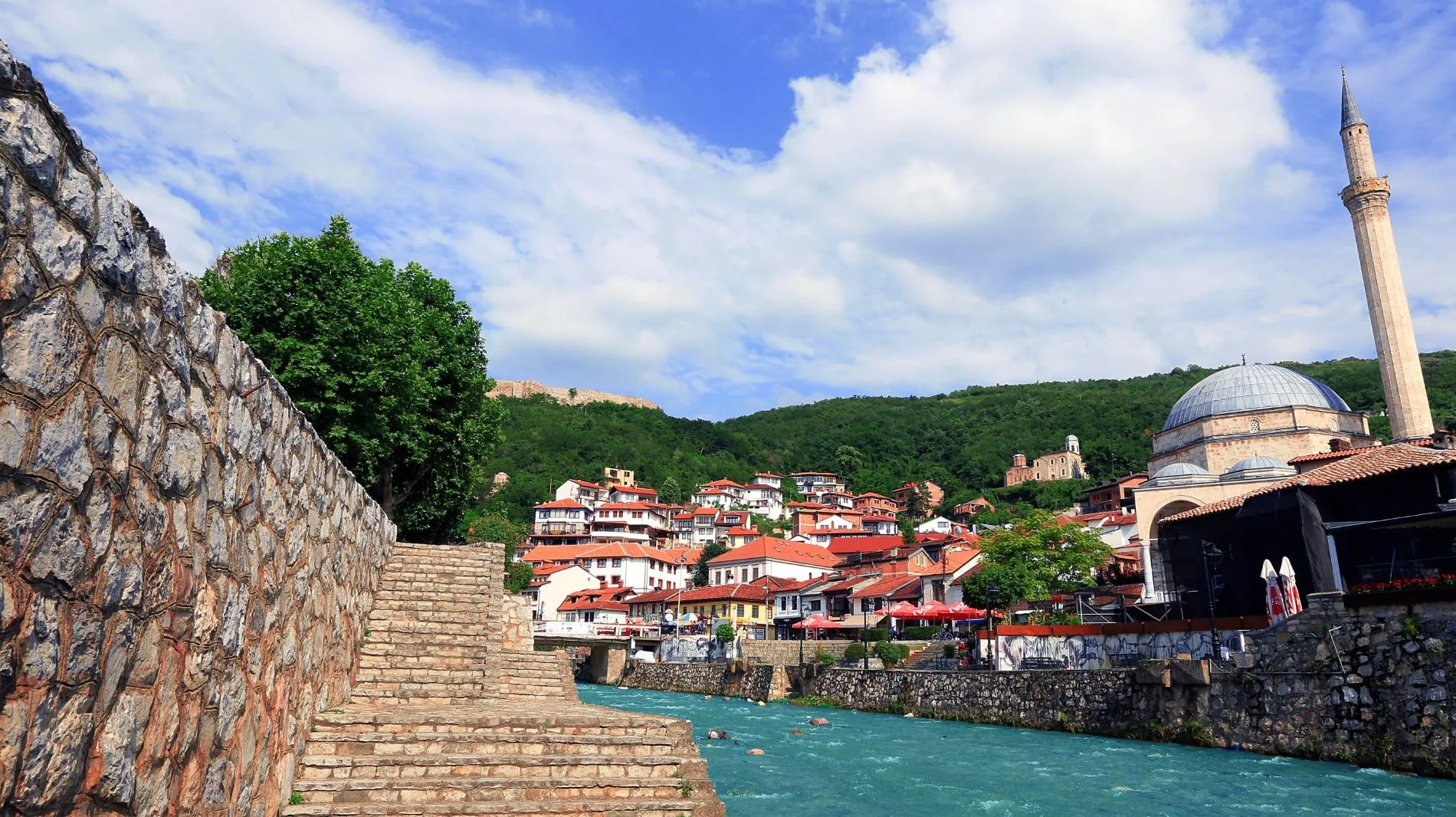
Sinan Pasha Mosque is arguably Prizren’s most recognisable Ottoman monument. Its tall minaret and large domed structure dominate many views of the old town, while the interior is known for decorative painted surfaces and an impressive sense of scale.
The mosque was built during the Ottoman period and remains an active place of worship. Visitors may be welcomed outside prayer times, but entry is never guaranteed. Remove your shoes if requested, dress with shoulders and knees covered, and women may wish to carry a lightweight scarf. Men should also avoid sleeveless clothing. These simple gestures show respect and make the visit more comfortable for everyone.
When inside, pay attention to the relationship between the dome, windows, calligraphic decoration, and wall ornament. Outside, step back into the square to appreciate how the mosque anchors the surrounding urban space. Street life here changes throughout the day: mornings are calmer, afternoons bring café activity, and evenings often produce the most atmospheric combination of illuminated architecture and local conversation.
Budget approximately 20 to 30 minutes for Sinan Pasha Mosque. There may be no standard entrance ticket, although donations are appreciated where appropriate. Always check current visitor rules locally because access policies can change according to religious observance.
5. The Old Stone Bridge
Finish the core heritage route at the Old Stone Bridge, one of Prizren’s most photographed landmarks. Crossing the Lumbardhi River, the bridge connects the visual language of the old town: stone, water, domes, minarets, church towers, and mountains appear together in a single compact scene.
The bridge is especially attractive in the early morning and around sunset. For the classic photograph, stand slightly downstream and include the bridge, riverfront buildings, and Sinan Pasha Mosque in the same frame. Be careful on the riverbank, especially after rain, because some surfaces can be slippery.
This is an ideal place to pause and reflect on the route. The Albanian League represented national and civic history; the cathedrals revealed the city’s Christian traditions; the mosque expressed Ottoman Islamic architecture; and the bridge symbolises the way these layers remain physically connected. Nearby cafés are convenient for Turkish coffee, local pastries, cold drinks, or a longer meal.
Optional extension: Prizren Fortress
If you have additional time and reasonable mobility, extend your self-guided tour to Prizren Fortress. The climb is steeper than the central route and may take approximately 20 to 35 minutes each way, depending on your pace and starting point. In return, you receive broad views over the red roofs, minarets, church towers, river valley, and surrounding mountains.
Wear shoes with good grip and carry water, especially between June and August. The fortress is best visited in the late afternoon when the heat is lower and the city is bathed in warm light. Allow at least an hour for the walk and viewpoint. Families with young children should assess the paths carefully, as surfaces can be uneven.
How much does a self-guided tour of Prizren cost?
The walking route itself can be very inexpensive. Exploring the streets, bridge, squares, and exterior viewpoints is free. You may pay small admission fees for museums or heritage interiors, while food, drinks, and transport are additional. A realistic 2026 budget for one person is approximately €10 to €20 for a modest museum visit, coffee, lunch, and local transport, excluding accommodation.
Prices vary by venue and season, so use these figures as planning guidance rather than fixed tariffs. Keep euro notes and coins available, particularly for small cafés, taxis, museum desks, and donations. Larger restaurants and hotels are more likely to accept cards, but a cash reserve remains useful.
Best time to visit Prizren in 2026
The best overall seasons for a self-guided tour of Prizren are May, June, September, and October. Temperatures are usually comfortable for walking, the light is excellent for photography, and the city is less intense than during the peak summer months.
- Spring: mild walking weather, fresh greenery, and good conditions for the fortress climb.
- Summer: lively cafés and long evenings, but begin early to avoid midday heat.
- Autumn: comfortable temperatures, warm colours, and a relaxed atmosphere.
- Winter: quieter streets and occasional snow in the mountains, though some attractions may have shorter hours.
During major religious holidays, cultural festivals, and summer weekends, expect busier streets and possible changes to access. Confirm opening hours shortly before your visit rather than relying only on an old printed schedule.
Getting to Prizren
Prizren is connected by road with Pristina and other Kosovo cities. Buses are generally the most economical option, while a private transfer or rental car offers greater flexibility for travellers combining Kosovo with Albania, North Macedonia, or Montenegro. From Pristina, the journey commonly takes around one to one and a half hours, depending on traffic and departure point.
If you are beginning in the capital, consider pairing this visit with the Self-Guided Tour of Pristina. Travellers arriving from North Macedonia can compare this route with the Skopje to Pristina Day Tour, while those seeking a nature-and-city combination may enjoy the Skopje full-day tour with Matka Canyon before continuing into Kosovo.
What to eat after your walking tour
Prizren is an excellent city for a relaxed meal. Look for flija, a layered pastry traditionally prepared with cream, grilled meats, fresh salads, stuffed peppers, burek, and hearty bean or vegetable dishes. Turkish coffee, tea, and syrupy sweets are natural companions to an afternoon beside the river.
For the best experience, ask for local recommendations rather than choosing only the most photographed restaurant. A modest family-run venue can offer a more memorable meal than a busy tourist terrace. In summer, reserve time for a long coffee break; in winter, choose a warm interior near the historic centre.
Practical tips and etiquette
- Wear supportive footwear because old-town paving can be uneven.
- Carry water, sun protection, and a small amount of cash.
- Dress modestly when entering mosques and churches.
- Ask permission before photographing people, worshippers, or religious ceremonies.
- Do not assume every historic interior is open every day.
- Start early in summer and save the riverfront for the evening.
- Use a licensed taxi or reputable transfer for late-night journeys.
- Keep your itinerary flexible during festivals, services, or unexpected closures.
Where Prizren fits into a Balkan itinerary
Prizren works beautifully as a one-night stop or as part of a longer cultural journey through Kosovo and neighbouring countries. History-focused travellers can combine it with the Grand Tour of Kosovo or the Classical Tour of Kosovo. If you want to connect Kosovo and Albania in one itinerary, the Kosovo and Albania Cultural Journey offers a useful regional framework.
Prizren can also be paired with Berat, another Balkan city celebrated for its historic architecture. Compare the experience with the self-guided tour of Berat, or choose the guided Walking Tour of Berat if you prefer local commentary. For travellers continuing toward Albania’s capital, the Walking Tour of Tirana provides a contrasting look at a more modern urban centre.
Frequently asked questions
How long does a self-guided tour of Prizren take?
The central route takes approximately two to three hours at a comfortable pace, including the Albanian League complex, three religious landmarks, and the Old Stone Bridge. Add one to two hours for lunch, museums, photography, and café breaks. Prizren Fortress requires additional walking time.
Is Prizren suitable for a self-guided walking tour?
Yes. The principal historic sights are concentrated in and around the old town, making Prizren one of Kosovo’s easiest cities to explore independently. A route guide is helpful for historical context, opening-hour planning, and understanding how the different cultural layers connect.
What should I wear when visiting Prizren’s religious sites?
Choose respectful clothing that covers shoulders and knees. At mosques, remove your shoes when requested and carry a scarf if useful. Speak quietly, avoid flash photography, and follow instructions from staff or worshippers.
What is the best month to visit Prizren?
May, June, September, and October generally offer the best balance of comfortable walking weather, attractive light, and manageable visitor numbers. July and August are lively but can be hot in the middle of the day, so start early.
Can I visit Prizren as a day trip?
Yes. Prizren can be visited as a day trip from Pristina, although staying overnight allows you to enjoy the old town after day visitors leave. An overnight stay is especially worthwhile if you want to climb the fortress at sunset or take your time with local food and cafés.
Book your Prizren heritage experience
Prizren rewards curiosity, patience, and comfortable walking shoes. Its monuments are close together, but the stories behind them reach across centuries of Ottoman, Albanian, Catholic, Orthodox, and local urban history. For a clear route and a richer independent experience, plan your visit with the Self-Guided Tour of Prizren and discover the city at your own pace in 2026.
Frequently Asked Questions
How long does a self-guided tour of Prizren take?▼
The central route takes approximately two to three hours. Add one to two hours for lunch, museums, photography, café breaks, and a possible climb to Prizren Fortress.
Is Prizren suitable for a self-guided walking tour?▼
Yes. The principal historic sights are concentrated around the old town, making Prizren easy to explore independently. Comfortable shoes are recommended because some streets are cobbled and uneven.
What should I wear when visiting religious sites in Prizren?▼
Wear clothing covering the shoulders and knees, remove shoes when requested at mosques, and speak quietly. Always follow local instructions and ask before taking photographs.
What is the best time to visit Prizren?▼
May, June, September, and October usually provide the best walking conditions. Summer is lively but can be hot, so start the route early or walk in the late afternoon.
Can Prizren be visited as a day trip?▼
Yes. Prizren is reachable by road from Pristina and works well as a day trip, although an overnight stay gives you more time for the fortress, cafés, photography, and evening atmosphere.